Software Architecture
4 Software Architecture Lessons from the Burj Khalifa
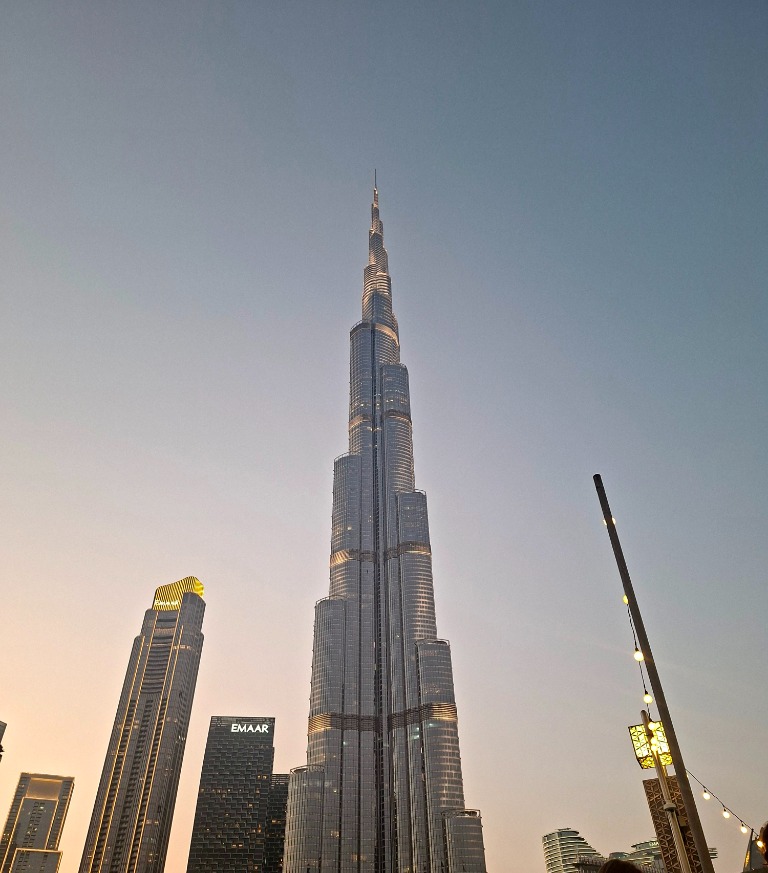
Today I stood at the base of the Burj Khalifa in Dubai, looking up 828 meters at one of the world's most ambitious engineering feats.
As a Software Architect, it’s hard not to look at a mega-structure like this and see parallels to the systems we build every day. Standing over 160 stories tall doesn't happen by accident—it requires intentional trade-offs, resilience, and a blueprint built for extreme conditions.
Here are 4 software architecture lessons I’m taking away from today’s visit:
1. The Buttressed Core → Strong Foundations & Bounded Contexts
The tower uses a Y-shaped footprint with spiraling setbacks around a central hexagonal core to disperse wind forces. In software, we need that same rock-solid core platform while allowing peripheral services to scale, step down, and evolve independently without shaking the whole system.
2. Designing for Extreme Conditions → First-Class Non-Functional Requirements
Engineers had to account for desert heat, high-altitude winds, and moving tens of thousands of people vertically every day. In our world, latency, fault tolerance, and peak traffic spikes can’t be afterthoughts—they have to shape the architecture from day one.
3. Adapting Infrastructure at Scale → Evolving Your Tooling
During construction, standard radio signals failed past the 30th floor, forcing teams to deploy a wireless mesh network to keep going. Every growing software system hits "scale cliffs." Great architects recognize when existing protocols, queues, or databases have reached their limit and evolve the underlying infrastructure before bottlenecks stall delivery.
4. Cross-Discipline Alignment → Explicit Contracts
Building a skyscraper takes seamless coordination across structural, mechanical, and design teams. Building resilient software takes the exact same clarity—through well-defined API contracts, Architecture Decision Records (ADRs), and shared system models across product, security, and engineering.
Whether it’s steel and concrete or code and cloud, great architecture is about designing for the forces you know are coming—and leaving room to adapt to the ones you don’t.
What’s a real-world structure or engineering feat that has inspired how you design systems? 👇
#SoftwareArchitecture #SystemDesign #EngineeringLeadership #BurjKhalifa #Dubai #TechLeadership